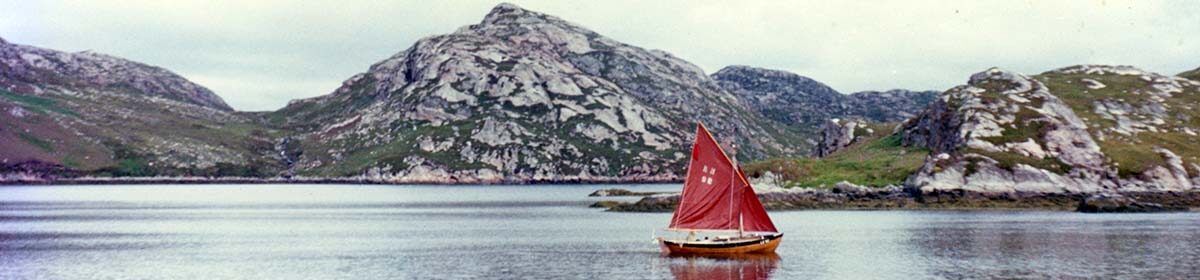
Chapter 14 of the Voyage of The Aegre tells of our fast wet passage across the Caribbean. After just 11 days we stormed into Limon Bay at the northern end of the Panama Canal. But our radio receiver had drowned and our main compass become unserviceable.

The Passage through the Panama Canal – Chapter 14
How did we get through through the Canal without the required engine? As I explain in Chapter 14, solo sailor Tom Blackwell invited us to lash alongside his 55ft ketch Islander. We’d first met Blackwell in Madeira, see Notes on Chapter 9. The Aegre still needed to be officially measured to calculate the fee for passing through the Canal. She was rated as 2 tons, and at 72 cents a ton, the fee 1n 1974 was US$1.44. (Still only equivalent to US$11.26 in 2024).


Traversing the Canal today is rather more expensive. Vessels up to 15m (50ft) pay a toll of US$800 according to Wikipedia. For more on going through the Canal in a yacht (albeit today) see this Yachting World article . For a historical perspective from 1916 at the time of the Canal opening, see The Panama Canal by Reginald Enock. A fascinating book of its time. I found a used copy for $1 in a NZ bookshop in 1975.

A Proper Chronometer – Chapter 14
In Chapter 14 I explain how we had the radio repaired, but decided we couldn’t rely on it for time signals across the Pacific. To supplement it we bought a highly accurate watch, a Bulova Accutron, to use as a chronometer, costing US$80 in 1974 (Approx US$624 in 2024). A predecessor to quartz watches, this was probably the most accurate timepiece available at the time, rated at being accurate to 2 seconds a day, (1 minute a month). The Accutron would come to transform my confidence in the accuracy of my astro navigation.
For more about the Bulova Accutron see below an extract from Wikipedia below (ref: https://en.wikipedia.org/wiki/Bulova#Accutron )

Bulova’s “Accutron” watches, first sold in October 1960, used a 360 Hz tuning fork instead of a balance wheel as the timekeeping element. The tuning fork was powered by a one-transistor electronic oscillator circuit, so the Accutron qualified as the second “electronic watch“, following the Hamilton Electric released in 1957.
Instead of the ticking sound made by mechanical watches, the Accutron had a faint, high-pitched hum that came from the vibrating tuning fork. It was a forerunner of modern quartz watches that also keep time with a vibrating resonator. The Accutron was guaranteed to be accurate to one minute per month, or two seconds per day, considerably better than mechanical watches of the time. By 1973, over four million Accutrons had been sold.
A Reflection
Then we were off, out into the Pacific. As I reflect in the book, this was an ambitious change to our original plan, not that we had a plan for what we would do after reaching the West Indies, beyond finding work, and then probably sailing back to the UK via the Azores in the northern hemisphere late spring.
But heading on to the Pacific? I worried a little if we and The Aegre were really up to it, or might it be one step too far?
Looking back after fifty years, I can see that we’d become used to the tropical dusk falling quickly. But in summer, in the high lattitudes of the North of Scotland, the light fades so slowly that it can be hard to tell the day is passing, the sun is falling, and that darkness will come. So I think it was aboard The Aegre. We were enjoying the sunshine so much we didn’t notice that the sun had peaked for us and started to slip downward. Inexorably we were sailing on. But the light had begun to fade, and darkness would come.
Back to List of Chapter Notes.
Read the book for the whole story
Back to the Home page of The Voyage of The Aegre