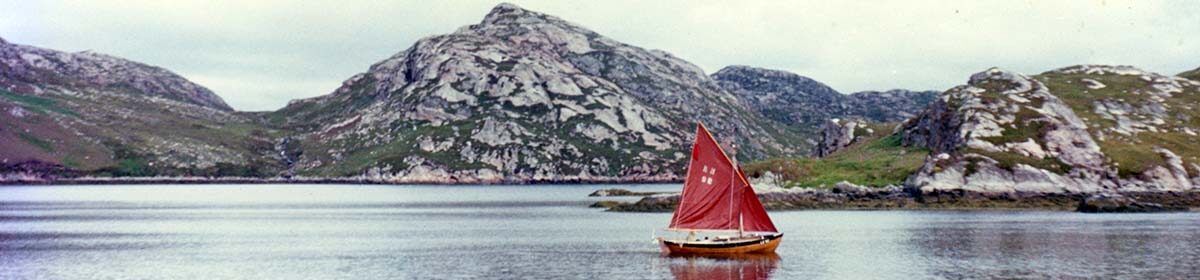
Chapter 20, the final chapter in the book, is about our arrival, stay, and eventual departure from American Samoa. These Notes include photos of The Aegre being pulled out of the water, more about Somerset Maugham’s novel Rain, a TV interview that disappeared, the Barbados rum promised to boatbuilder Bob Macinnes, our leaving Pago Pago, the fate of The Aegre, and more.


Pulling The Aegre out of the water at the Marine Resources slipway, Pago Pago, on the day we arrived.
Rain, by Somerset Maugham
I open Chapter 20in the book with a paragraph about Somerset Maugham’s most famous and successful short story, Rain. The story is set in Pago Pago, where it rains a lot; the average annual rainfall ranges from about 120 inches (304 centimetres) along the coasts to as much as 300 inches (762 centimetres) in the high mountains.
The story tells of how a missionary’s determination to reform a prostitute leads to tragedy. Maugham wrote it during an enforced stay in a guesthouse near the Pago Pago township. The guesthouse is now known as The Sadie Thompson Inn and Sadie’s Restaurant.


Maugham’s novella was made into a movie, Rain, a 1932 drama film starring Joan Crawford as the prostitute Sadie Thompson. You can watch it by following the link below. Directed by Lewis Milestone and set in the South Seas, the production was partly filmed at Santa Catalina Island and what is now Crystal Cove State Park in California. The film also features Walter Huston as the conflicted missionary who insists that Sadie end her evil ways, but whose own moral standards and self-righteous behaviour steadily decay.


The plot of the film is based on the 1922 play Rain by John Colton and Clemence Randolph, which in turn was based on the 1921 short story “Miss Thompson” (later retitled “Rain”) by W. Somerset Maugham. Actress Jeanne Eagels had played the role on stage. Other movie versions of the story include a 1928 silent film titled Sadie Thompson, starring Gloria Swanson and Miss Sadie Thompson (1953), which starred Rita Hayworth. You can watch the 1932 movie on YouTube here https://www.youtube.com/watch?v=_CkVD0Nk_D0
KVZK-TV, a TV Education Experiment –
In Pago Pago, we quickly met local community leaders and members of the expatriate community. Two of the latter, Ed and Trudie Roberts, arranged for us to move into a temporarily empty house next door to theirs in Tafuna, which was just a small community in those days.
Ed and Trudie worked in the American Samoa KVZK-TV Education Experiment in full swing in 1974. Although other instructional television initiatives were ongoing around the world, its introduction in American Samoa “was the first time a developing region set out to use that medium in an all-out attempt to modernise an educational system.” So wrote mass communications scholar William Schramm and his colleagues in the 1981 book Bold Experiment: The Story of Educational Television in American Society. You can learn more about the experiment here https://hackeducation.com/2015/06/06/american-samoa-educational-tv
The education program was run with the local TV station KVZK-TV, and it wasn’t long before we were interviewed. The Station was planning a 30-minute program on our voyage. To illustrate it, I wrote home and asked my parents to send copies of photos we’d sent them earlier for safekeeping. They eventually arrived and were assembled into storyboards.

But nothing ever came of it; today, there seems to be no trace of the original recording. Meanwhile, Ed Roberts, working in the Art Department, presented me with a grand certificate:

What happened to the Barbados Rum?
Back in Scotland, boat builder Bob Macinnes had decked The Aegre. We’d promised to bring him back a bottle of rum from Barbados. We had it safely with us when we reached Pago Pago. But did he ever receive it?

Yes, he did. Ken Bailey, the Lancashire shipwright we met in Pago, offered to take it back to England when he returned to the UK. Then take it to boatbuilder Bob Macinnes in Scourie, NW Scotland. He did, too, but it took a while. It was not till ten years later, in 1984, that Bob wrote to say he’d received it:


It was Bob’s last letter to me.
Life in American Samoa – Chapter 20


We were loaned a house and car in Tafuna. Julie got a job at the Bank of Hawaii, and each day, we drove into town. (click to enlarge)


I often went to the Post Office as we had to replace all our documents (lost in the capsize).

And a few other places…


Departure to New Zealand – Chapter 20
As I explain in Chapter 20, we eventually decided to cease voyaging aboard The Aegre and instead fly to New Zealand. We ultimately flew out at about midnight, a few days before Christmas 1974, and were farewelled at the airport by Ken and Jennifer Bailey, who had looked after us so well.


On our departure from American Samoa, The Samoan Sun newspaper published a short piece about us.

What happened to The Aegre?
As I tell in the Postscript to the book, we left the hull of The Aegre with shipwright Ken Bailey, who had agreed to repair her and put her up for sale. Nearly a year later, in September 1975, he completed the repair and she was quickly bought by the only Scandinavian living on the island, Hans Mose.
But then, in March 1976, a young American Peace Corps volunteer, Gene Feldman, who was working in Upolo, Western Samoa, came over to Pago Pago to join a team doing experimental tuna fishing. Each morning, they would head out of the harbour early, looking for schools of tuna. On one such day at sunrise, he caught a glimpse of a little white double-ended Scandinavian-like sailing boat rocking gently on a mooring. The boat seemed strangely out of place in the middle of the South Pacific.

It was love at first sight. He asked around, found the owner, Hans Mose and persuaded him to sell The Aegre to him. Back in Upolu, over the next month, he gathered together everything he thought he might need, then headed back to Pago on the overnight ferry to complete the purchase of The Aegre and then sail her alone a hundred miles back to Upolu and onto a mooring in Apia harbour.
No mean voyage for a young fellow whose previous sailing experience comprised half a dozen afternoon sails on a 14′ Sunfish at a summer camp on a lake in Pennsylvania. But Feldman had gained extensive sea time on commercial fishing boats as part of his university Oceanography studies and had read every sailing adventure book he could find. He was no stranger to the sea and far from being unprepared.
Gene took the photo below while rowing out to The Aegre in Pago Pago harbour, about to head off to Upolu in April 1976,

The passage to Upolu took a few days and was not without incident, but The Aegre looked after Gene as well as she had us. I hope you’ll read his story in a magazine one day.

Gene continued to work in Upolu, The Aegre to live in Apia harbour, with Gene and his friends taking her out for frequent short sails. Gene eventually flew back to the USA, leaving The Aegre in Apia in the charge of some of his friends.

Unfortunately, no one seems to really know what happened to her after that. But a few years later, a violent tropical cyclone swept over Samoa, and The Aegre is believed to have been lost.
I would rather think that The Aegre became dissatisfied with her life rotting on a tropical mooring, and when the opportunity came, she took herself off to sea in the Viking way, never to be seen again.

How do I know about Gene Feldman and The Aegre?
When Gene first found The Aegre, he heard from Hans Mose about how this little Shetland boat came to be in the middle of the Pacific, but it wasn’t until twenty-five years later that he chanced across a website I had built on the Internet with an early short version of The Aegre story. Over all those years, I’d wondered what happened to her. So I was amazed to suddenly receive an email from this Gene Feldman in Washington D.C, saying, “I bought The Aegre!”
Sharing our stories, we were astonished to discover how we so nearly met on the southern shore of Upolu back in 1974. (See the Chapter 19 Notes)
We corresponded for another twenty years. Then, in 2019, with Gene’s strong encouragement, I decided to write the whole story down. So it was with Gene’s tireless support, reading and critiquing every chapter as I wrote it, that the story of ‘The Voyage of the Aegre’ was finally written and published.
This concludes the Chapter Notes on The Voyage of The Aegre. I hope you have found them an interesting supplement to the book.
Nicholas Grainger, December 2024
Back to the List of all the Chapter Notes
Back to The Voyage of The Aegre homepage.